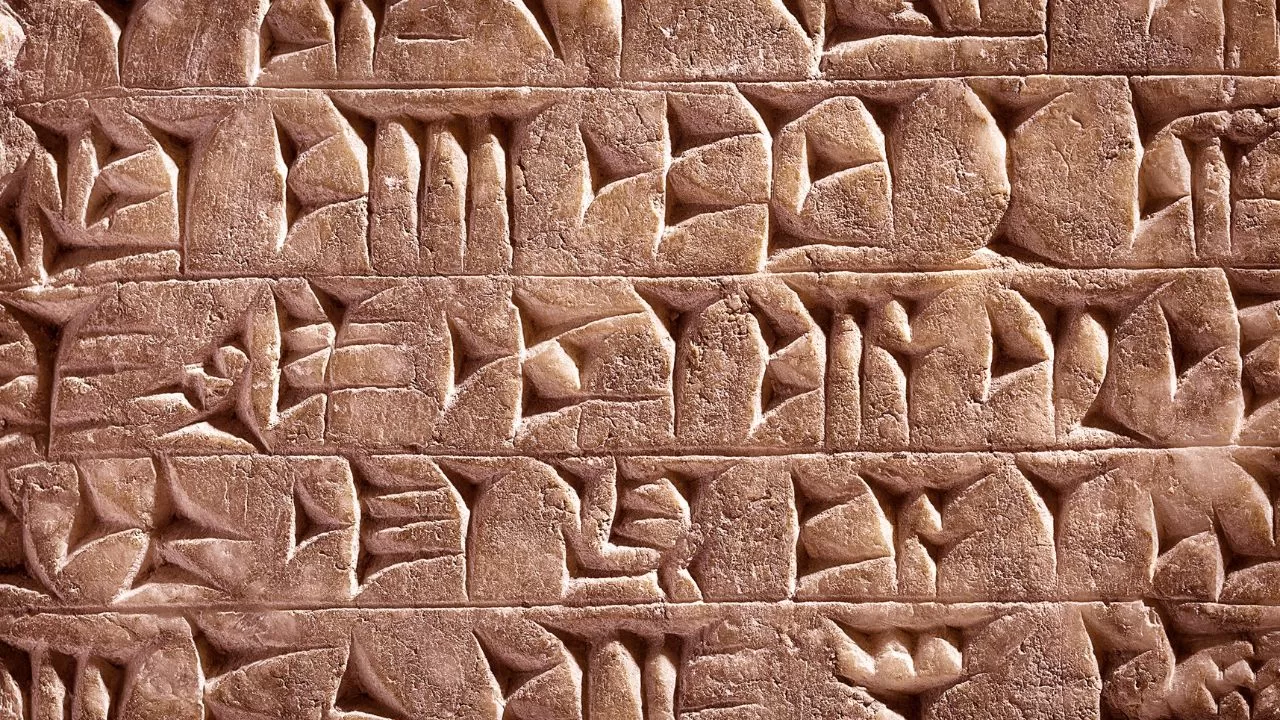
When people hear "cuneiform tablets with herbal formulas," they often imagine something like a handwritten recipe book — a list of plants with neat instructions. The reality is considerably more interesting, and considerably more complicated.
Mesopotamian medical writing spans at least two thousand years and several distinct scribal traditions. The texts that survive from ancient Nineveh — from the library of Ashurbanipal, dated to around 650 BCE, though drawing on much older sources — represent a highly developed and systematised tradition. They are not folk remedies. They are the product of a professional class of scholars called āšipu (ritual practitioners) and asû (physicians), who understood illness through a framework combining empirical observation with theological interpretation.
The Structure of a Medical Text
A typical tablet prescription follows a recognisable format: it begins with a statement of symptoms or a named condition, then lists one or more plant substances with a preparation method (grinding, soaking, heating, mixing with fat, oil, or beer), and concludes with instructions for administration — whether applied externally, taken internally, used as a fumigant, or worn as an amulet.
The botanical section is the most directly useful to us, but it is also the most difficult to interpret. Herbs are listed by their Sumerian or Akkadian names — often both — but these names do not always correspond cleanly to species we can identify today. Some are well-established: cedar (erenu) and cassia (kasû) are identified with confidence. Others remain genuinely uncertain, debated among Assyriologists and archaeobotanists whose identifications don't always agree.
The Challenge of Quantities
One of the most persistent difficulties is measurement. The texts use units — the shekel, the mina, the qû — which Assyriologists have partially reconstructed from other contexts. But the quantities given in prescriptions are often not absolute amounts; they describe proportions, or they specify the preparation method in terms that imply particular quantities without stating them explicitly. "Grind to a powder" tells you the form, not the amount.
This means that any attempt to "reconstruct" a Mesopotamian formula with modern precision has to involve a degree of interpretation. We are transparent about this. Where the historical record is clear, we follow it. Where it is ambiguous, we say so.
What We Can and Cannot Know
There are things the tablets tell us clearly: which plants were used, in what form, for what stated purpose. There are things they tell us partially: rough proportional relationships between ingredients. And there are things they do not tell us at all: the precise dosage, the exact preparation time, the specific variety of a named plant in a particular growing region.
The approach we have taken with Nineveh Laboratories is to start with what is most clearly documented and work outward from there. Reading the tablets is not a straightforward act of recovery. It is a scholarly process involving philology, archaeobotany, comparative ethnobotany, and a great deal of calibrated uncertainty. That uncertainty is not a weakness of this project. It is its honest foundation.